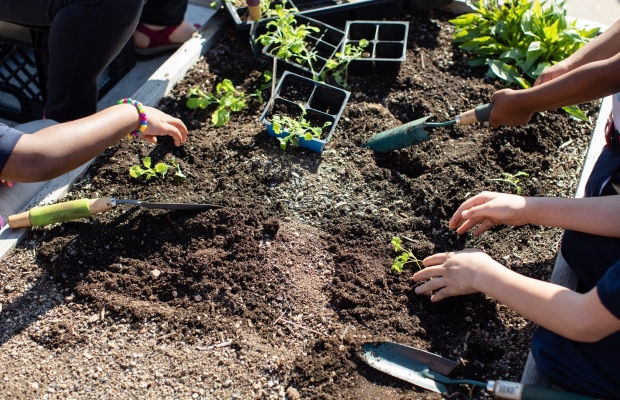

At the end of World War II, 40% of the fruits and vegetables produced in the United States were grown in school gardens, home gardens, vacant lots in cities and other public land. This was a result of the federal government’s Victory Gardens campaign to strengthen our country’s resiliency and conserve resources while the war was being fought overseas. Local food systems have not been that strong since — but they could be again.
At food co-ops, we know the benefits of strong local food systems are many — the appeal of fresh, nutritious, delicious homegrown food never gets old — but local food also connects rural and urban economies, provides opportunity for entrepreneurs and makes farming a viable small scale operation again. Ask the folks in your produce and meat departments for local farming success stories and you are sure to hear something that will move you.
Recognizing food co-ops’ place as leaders in the local food movement, NCG has partnered with National Farm to School Network (NFSN) annually since 2019 to build a bridge between food co-ops and farm to school groups. Farm to school has also had tremendous success in growing support for local food systems. Since 2007, NFSN and their network of partners in all 50 states and U.S. territories have brought locally grown fruits and vegetables into school cafeterias, established school gardens and implemented food, nutrition and agriculture curriculum in 42% of schools (and growing).
Racial Equity in the Local Food Movement
Local food systems often reflect the same inequities present in the wider U.S. food system — Black, Indigenous and people of color (BIPOC) are underrepresented as farm owners and overrepresented as food system laborers. Schools with majority BIPOC students are less likely than those with majority white students to have fresh fruits and vegetables available in school meals. Retail outlets and grocers that stock fresh fruits and vegetables are less likely to be located in majority BIPOC communities than their white counterparts, to cite just a few ways in which the food system is inequitable now.
Like NCG, NFSN has also been vocal about the need to improve racial equity in the local food movement. NCG advocacy staff attended NFSN’s 2020 Movement Meeting, with keynote by food justice activist and urban farmer Karen Washington. At the meeting, we were inspired by their call to action to see 100% of communities holding power in a racially just food system by 2025. NCG invested in this call to action last year and this year, we’ve sponsored NFSN’s Facebook Live coffee chat series, focused on conversations about racial equity in the local food movement. We hope that interested co-op staff will attend these conversations (or listen to recordings) and gain valuable insight into the work that farm to school groups are doing on the national and local level to make local food systems more just and equitable.
Partnering with Farm to School Groups in Your Community
If your co-op doesn’t already, consider getting in touch with a local farm to school group in your community and find out if there are ways your organizations can work to support one another in the building of a strong, equitable local food system. Consumer research NCG conducted in 2018 indicated that food co-ops have an opportunity to improve our relationships with families that have children — partnering with groups that are serving local food and farm education to kids might be a good start. Raising funds at the register or providing in-kind donations of seeds and starter plants are also common ways food co-ops support farm to school groups now. Because these programs are so successful at improving kids’ willingness to eat fruits and vegetables, making the connection that local food is found year-round at the co-op might also be a mutually beneficial exchange!
If your co-op is interested in connecting with an existing local farm to school effort or, if farm to school is not active in your community and the co-op has resources to get a conversation started between local producers and schools in your community, you can access NFSN’s farm to school partner database to find a place to begin networking with farm to school groups in your state and local community.
And, don’t forget to check out NFSN’s Facebook Live monthly coffee chat series, sponsored by NCG and focused on topics pertaining to building racial equity in local food systems — past conversation archives can be found on NFSN’s YouTube channel. These calls are open to the public — please feel free to share and/or promote the series with your personal networks or wider community via social media.