
In the wake of George Floyd’s murder, co-ops across the country have added their voices to the call for justice for the Floyd family and other victims of police brutality as well as an end to systemic racism. Actions include posting supportive statements to websites and social media; donating to community organizations that are focused on racial justice, police reform and lifting Black voices; and reviewing internal policies and practices. A few of the many examples of co-op response are shown below.
Dismantling systemic racism will take more, of course. Throughout the system, co-ops are turning to their staff, board and owners as well as to each other to listen, learn and identify how we can work within and across our co-ops for lasting change.
Durham Co-op Market
Durham Co-op Market in Durham, North Carolina, drafted both short- and longer-term plans through which their co-op can address systematic racism. They offered these to owners for input, feedback and criticism to generate ideas and start conversations on actions that can be taken.
Short-term ideas include:
- Adjusting work schedules so staff can engage in organizing, protest or reflection
- Donating water and supplies to protests, vigils, etc., to support protesters
- Offering financial support to Black-owned businesses that vend products through the co-op
Longer-term ideas include:
- Setting up a staff committee at the co-op on equity
- Developing an equity-focused management training program to support the transition of staff into positions of higher pay and greater responsibility
Seward Community Co-op
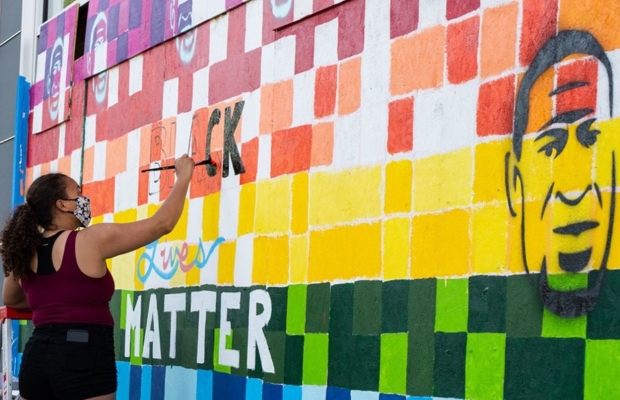
Murals and art honoring Black lives have been popping up all over the Twin Cities since the killing of George Floyd. On June 5, Minneapolis artists visited Seward Co-op’s Franklin and Friendship stores to create murals on boards covering the windows. Seward’s website states: “Art brings hope and vitality to our lives. We hope to offer a canvas to express emotions and grief, and to support the community in metabolizing trauma.” A feature on the murals ran on the Twin Cities CBS television station.
Seward worked with local, BIPOC-led artist groups to create murals for both stores. The lead artists for both locations brought together a larger team of artists, including youth, to complete the project. Seward also issued an invitation to the wider community to write messages of justice, love and hope in chalk on the sidewalks surrounding their stores. View photographs of the new murals at the Friendship and Franklin locations.
Mariposa Food Co-op
Mariposa Food Co-op in Philadelphia has been donating water and other necessities to protestors, community members and organizations in need. Their board of delegates recently issued a statement, reading: “We remind our community that one of our stated goals is to ensure that ‘Mariposa is a community in which systems of oppression have been dismantled.’ We are here for you as your community-owned grocery store, and we will uplift and support, as long as we need to.” Read the full statement.
Wheatsville Food Co-op
In addition to donating to Black-run organizations working to address inequality and inequity, Wheatsville Food Co-op in Austin, Texas, is also reevaluating their operating procedures “to make sure that they are not putting anyone in harm’s way. Especially those adversely affected by systemic racism.” Wheatsville is encouraging owners to use their voices to help those who need it most. Read their full post.