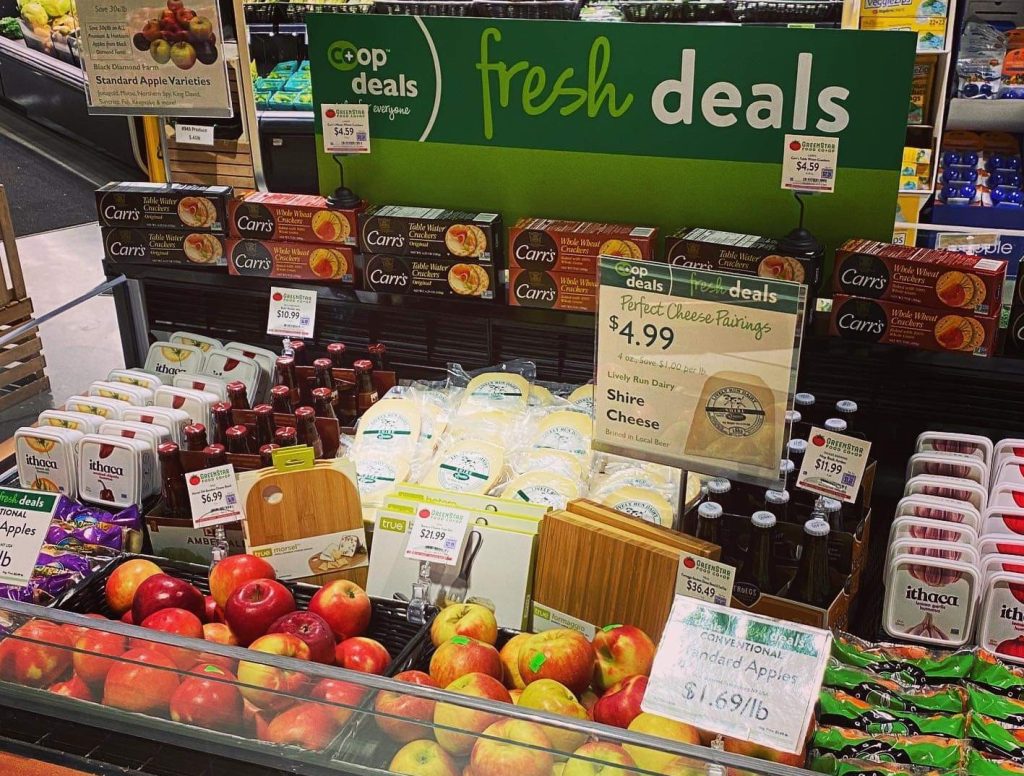

Using cross-functional store teams to plan promotions can be a great way to create effective promotional programs that are fun and engaging for your customers, position the co-op as an exciting destination, and communicate your values to the community. An integrated promotional plan is one that encompasses all store departments, enhances teamwork, creates an outstanding experience for shoppers, and increases sales and basket size.
Take a whole-store approach to your promotions. Well-planned promotions that incorporate fresh produce, meat and seafood, refrigerated grocery, bulk, grocery, wellness, general merchandise and prepared foods can accomplish several things, such as:
- Improve internal communications and teamwork
- Identify and capitalize on opportunities for cross-merchandising, product demos and consumer education (like spotlighting suppliers or providing seasonal recipe and menu ideas)
- Highlight products that support the co-op’s values (local, fresh, fair trade, seasonal, etc.), or are tied to a particular occasion
- Maintain and enhance price image
- Differentiate your store from competitors by shifting the promotional focus to incorporate signature fresh departments
- Increase sales
- Create a sense of excitement for existing customers
- Attract new shoppers
When everyone is headed in the same direction, there’s a greater likelihood that products will be ordered and stocked; signage and other promotional support materials, like recipes and coupons, will be available; and consumers will know about the promotion and make purchases.
Cross-functional Promotional Planning Tips
Monthly promotion team meetings work well for many stores. They allow your team to review the previous month’s promotions while they are fresh in your minds and to plan future promotions. The agenda should include review of the previous promotion; planning for the next month; assigning tasks and setting deadlines; and brainstorming for upcoming months and food holidays.
Get the right people involved and set clear expectations. Be sure to include key staff from marketing, produce, meat and seafood, prepared foods, grocery and wellness. If you have a demo, outreach, or education coordinator, they can also provide key support for the promo plan and should be included.
Distribute an agenda before each meeting and appoint a note-taker who will capture assignments and deadlines and distribute meeting notes to all participants and other key staff.
- Have measurable goals and track sales from demos and endcaps, as well as sale products and signature items included in your thematic promotions. Understand the sales lift needed for success.
- Brainstorm a list of products from all departments that could be included in the promotion. Be sure to include items available via Co+op Deals or other promotional programs; broker specials; and deals your buyers can obtain from local suppliers.
- Use NCG’s annual promotional calendars, seasonal fresh department articles from On Common Ground and Quarterly Promo Playbook to help generate ideas for seasonal, thematic and holiday cross-promotions.
- Identify appropriate high-traffic, visible areas for cross-promotional displays. Repeat thematic elements throughout the store (posters, shelf-talkers, smaller displays to supplement main display area, table tents, signs at checkout, etc.).
- Support promotions with demos, newsletter articles, social media, POS materials, recipes, displays and advertising. Check NCG’s website for ready-to-print recipes, signage and newsletter copy you can use. Most articles and recipes on grocery.coop are also available for you to reprint online or in your newsletter with proper credit.
- Have a plan for how far out the team is working. Typically, eight weeks is good amount of time.
Remember, though, the goal in planning is not to create additional work. For example, if the goal is a tropical theme, and there aren’t deals on applicable products readily available in all or even most key departments, it may not be beneficial to spend time and valuable labor sourcing deals to fit that theme.
The purpose of promotional planning is to highlight the products, deals and events that support your brand in a fun, engaging way that entices new shoppers to visit the store and existing shoppers to buy more of their groceries at the co-op. Promotional strategies include (but are not limited to) coupons, sales/deals, events, sampling, special displays, special signage, contests/giveaways, recipes/education, exclusive/limited time products, and are supported by a variety of marketing communications.
Roles
Strong promotional planning rests on a foundation of three essential leadership functions: marketing, procurement and operations.
Marketing
Ultimately marketing is responsible for the specific strategies and content for advertising, promotional signage and promotional themes, and marketing shares decision-making responsibility with operations regarding the dates and times of events. Marketing is best positioned to facilitate the meetings. At many stores, the marketing function is led by a dedicated marketing manager. At smaller stores, this function may be performed by the GM or an outreach coordinator.
Operations
Operations is accountable for the store’s P&L and is therefore responsible for ensuring the store and store staff are ready to execute promotional strategies. This includes store staffing for events, logistical needs for in-store execution, etc. Operations should share decision-making on timing of events with the marketing manager to ensure the necessary operational support (not scheduling large events during inventory, for example). Typically, the store manager represents operations in promotional planning, but the GM, an operations manager or even a department manager may be asked to represent this function, depending on the co-op’s resources.
Procurement
Procurement, usually the responsibility of a merchandising or purchasing manager (or grocery manager at smaller stores), is responsible for product selection and making sure prices align with the promo themes and marketing strategies. Procurement also ensures the co-op has sufficient product on hand. While the procurement function usually decides the placement of in-store displays, operations should also be consulted to ensure the store’s other operational objectives aren’t compromised.
NCG provides the Promo Playbook with a theme, endcap plans, featured recipes, products to target with promotions, sampling ideas, cross-merchandising ideas, contest ideas and holiday suggestions. These recommendations are based on sales data at NCG co-ops and in the industry.
Ideally, when it comes to promotional planning, everyone will know what was successful about last month’s promotions and why; everyone will know the status of the current month’s promotions and next month’s promotional plans; and everyone has a chance to give input in planning and knows how they will contribute to success.
Contributor: Molly Baeverstad, Marketing Services Manager