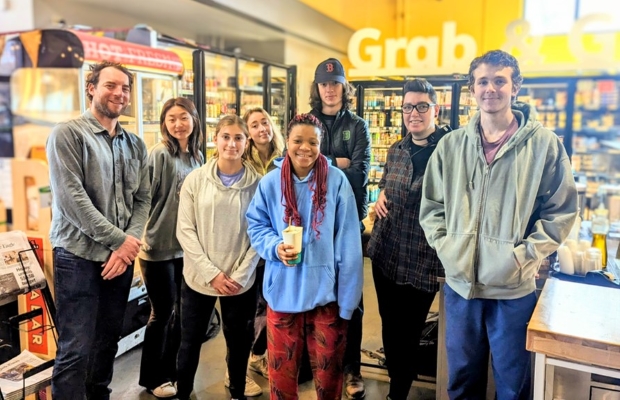

Berkshire Food Co-op in Great Barrington, Mass., recently hosted a group of high school students as part of their school’s Pro Vita week. Students learned about the co-op’s role in the local food economy, how prices are determined, the impact of factoring fair labor costs into pricing, and how to cook and develop recipes from scratch. The week culminated with the sale of three items developed by the students in the store, with all proceeds donated to local organizations the People’s Pantry, Sloan Kettering Cancer Center and Sheldrick Wildlife Trust.
The visit was set up when the environmental science teacher at Berkshire School, Patrick Donovan, reached out to the co-op about hosting students for a week. Donovan had been an owner at Berkshire Food Co-op (BFC) since moving to the area, so he was familiar with the co-op and its connections to local agriculture. Six students chose to take the course.
“The idea was to follow the path of the food from the ground to our mouths, including how the Fresh Foods team here chooses their ingredients and prices out the recipes they sell,” Devorah Sawyer, BFC’s marketing manager, said. “The first day we talked about what a cooperative is, the seven cooperative principles and how our store directly impacts our local farming community. The students came up with examples of things we do as a co-op and that our shoppers do that fall under each of the seven principles. Then we planned out our recipe that we’d be making later in the week.”
The remainder of the week involved the students working with BFC’s local food pantry and food distribution organization (People’s Pantry and Berkshire Grown) and shopping for the ingredients for the recipe they would eventually make and sell. The students developed a strategy and designated tasks for making two kinds of fried rice (veggie and shrimp) and a chocolate espresso cookie bar, which they would package and sell.
Throughout the week, the students learned how to shop in bulk, discussed the benefits of local vs. conventional ingredients, and made signs and posters to advertise their product and where the profits would be donated. They chose a price per pound for the rice and price for each of the bars based on labor hours, cost of ingredients, margin, etc.
Sawyer said she wrote the lesson plan to have a student-led focus. “We like to empower our local youth to direct themselves in their learning the way they want to,” she said.
“The coolest thing for me through the week was that this was an elective course, and these students chose to do this with our co-op,” Sawyer said. “It meant they really wanted to be there and learn about what we do […] and because of that, since it was my first time leading a course or doing real structured education like this, it was really rewarding, and the students learned exactly what they wanted to learn.”