
Co-ops can be climate leaders in their local communities and in the natural products industry. When it comes to reducing your carbon footprint, these tips are helpful for co-ops just getting started and co-op climate pros alike.
-
Know your carbon footprint: Understanding your carbon footprint is a smart first step. Tools like Co+efficient calculate it automatically based on metrics like electricity and gas use, and show how you compare to other co-ops.
Resources: Co-op Climate Impact Simplified, Co+efficient, Goal Setting Guide -
Seek energy efficiency: The endless possibilities for efficiency are specific to your unique store. A professional energy audit will prioritize solutions, starting with the quick paybacks and low hanging fruit.
Resources: Energy Audit, Energy Rebates, The Merc Co+op Case Study
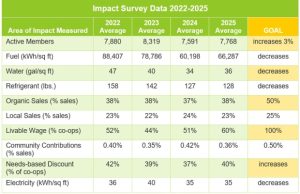
2020 Impact Goals: Achieve 15% reduction in electricity and 10% reduction in fuel use per square foot. -
Preventative maintenance on refrigeration: Normally refrigerant gas (coolant) is sealed away inside a refrigeration system. Over time without proper maintenance the coolant can leak out and quickly double your store’s carbon footprint. Luckily, most leaks are avoidable through preventative maintenance. Bonus: Well-maintained refrigeration will consume less electricity.
Resources: Guide to Refrigeration Management for Independent Grocers, City Market Case Study
2020 Impact Goal: Achieve 20% reduction in annual refrigerant gas leaks. -
Low global warming potential (GWP) refrigerants: Not all refrigerants are created equal. Conventional refrigerants can have a climate impact more than 4,000 times worse than CO2. Low GWP options are available with new refrigeration and as retrofits on some existing systems.
-
Culture and habits: In the highest performing stores, everyone is responsible for spotting inefficiencies and progress toward goals. Build this culture at your co-op by recognizing and rewarding those who find efficiencies.
Resources: Treasure Hunt for Energy Savings, Green Team Guide, Outpost Engagement Case Study -
Zero waste: Carbon emissions from landfilled materials contribute to the co-op sector’s footprint. The biggest opportunities for most co-ops are reducing food waste and keeping organic materials out of the landfill.
Resources: Waste Audit Guide, Food Loss Prevention Checklist -
Sales of local products: While there are exceptions, it’s usually true that products traveling shorter distances to the store have a smaller carbon footprint. Prioritizing local products helps the co-op and customers reduce the climate impacts of their food.
Resources: Food Conspiracy Co-op Case Study, Streamline Local Sourcing with a Local Vendor Guide
2020 Impact Goal: Increase average annual local sales from 21% to 25% of total sales. -
Influence suppliers: Let suppliers know about the co-op’s commitment to reversing global warming, and ask them to keep you informed of their efforts. Co-ops are encouraged ask suppliers to join you in making climate commitments through the Climate Collaborative.
Resource: Climate Collaborative -
Renewable energy: After maximizing energy efficiency, consider whether renewable energy could work for your co-op. Several NCG co-ops use a combination of on-site solar and renewable energy certificates (RECs) in order to get 100% of their power from renewable sources.
Resources: Project Sunroof, Seven Steps to Selecting a Solar Provider, Outpost Energy Case Study -
Carbon offsets: Co+op Forest and other certified carbon offsets are third-party verified to sequester carbon on your behalf. These projects are required to prove the project wouldn’t exist without the support from purchased offsets. Co+op Forest, with almost 2 million trees, supports biodiversity and regenerative farming methods while providing stable income to cooperative producers in Peru.
Resource: Co+op Forest
Extra Credit: Spread the word! Inspire your staff, members, community and partners by regularly sharing your co-op’s progress toward your climate goals.
Resource: Co+op, welcome to the table Brand Sustainability Impact Report Templates