

October is Co-op Month, and co-ops are getting major international attention this year: The United Nations declared 2025 as the International Year of Cooperatives. In today’s world, where corporate decisions are governed by profits and individualism is the norm, cooperation is truly radical. Now is the time to lift up the people-centered businesses at the heart of our communities and economies.
The United Nations International Year of Cooperatives 2025 (IYC 2025) was launched at the ICA Global Cooperative Conference and General Assembly held in New Delhi in June 2024. The conference attracted around 3,000 delegates from more than 100 countries who discussed how cooperatives encourage prosperity for all. This year’s theme, “Cooperatives Build a Better World,” underscores the vital role cooperatives play in sustainable development and positions them as essential solutions to today’s global challenges.
IYC 2025 highlights cooperatives’ contributions to sustainable development across social, economic and environmental dimensions and emphasizes the unique ability of cooperatives to foster inclusive growth and strengthen community resilience. According to the United Nations General Assembly, the resolution “notably focuses on the capacity for cooperatives to drive inclusive development, particularly in developing countries. It recognizes the role of cooperatives in promoting the economic status and capacity building of women and the wellbeing of vulnerable and marginalized people.”
Co-ops continue to be organized by communities across the U.S. and the world, anywhere people are interested in exercising more control over the kind of products and services they’re able to buy.
Here are several facts that highlight co-ops’ impacts on communities and our world that you can share with owners and shoppers:
- There are more than 30,000 cooperative businesses in the U.S.
- The food co-op communities across the country that own National Co+op Grocers (NCG) work together collectively to strengthen our ability to positively impact our food system and grow the cooperative economy in an inclusive and environmentally regenerative manner.
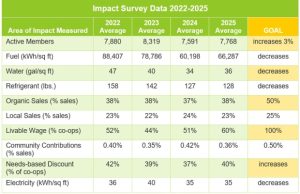
- Thirty-seven percent of food co-ops’ sales come from organic products (compared to 3% at conventional grocers), and 24% of sales at co-ops are from local products (as opposed to 2% at conventional grocers).
- Annually, $9 million was collectively donated to local community organizations by NCG co-ops.
- Co-ops work within our supply chain and industry and with the federal government to advocate for product labeling, disclosure of potentially harmful ingredients or contaminants, and protections for workers within our supply chain.
Want to share more about how to support cooperatives? Here are a few ideas:
- Check out NCG’s Co-op Month Resources with the theme “Cooperation is Radical.” The objective of the campaign is to raise consumer awareness about cooperatives as businesses that are better for people and planet.
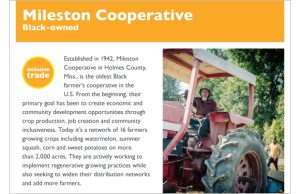
- Look for the Co-op Trade signs around food co-ops to find cooperatively owned brands.
- Learn more about the history of food cooperatives.
- Read the Cooperative Values and Principles, which serve as guidelines to provide a democratic structure for co-ops around the world.
- Find a co-op near you and start shopping there!