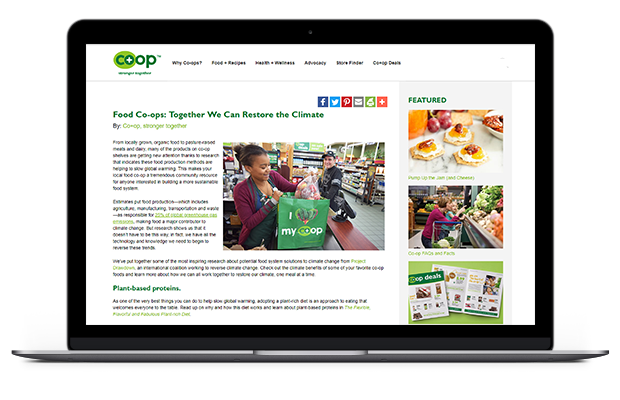

Estimates put food production — which includes agriculture, manufacturing, transportation and waste — as responsible for 25 percent of global greenhouse gas emissions, making food a major contributor to climate change. It’s a daunting statistic, but fortunately food co-ops have a different story we can tell.
From locally grown, organic food to pasture-raised meats and dairy, many of the products on your shelves are getting new attention thanks to research that indicates these food production methods are helping to slow global warming. Your co-op is a tremendous resource for people in your community who are interested in building a more sustainable food system, and the time to tell that story is now!
If your co-op is interested in sharing this research with your community, we’ve published a new series of articles on StrongerTogether.coop to help you do just that. Based primarily on scientific research from Project Drawdown, the articles share a positive and inspiring message that together we have the power to build a more sustainable, climate-friendly food system. You can share our posts for these articles on Facebook, or build your own. We’ve put together a social media kit with promotional ideas and images as well.
Articles cover the following topics:
Food co-ops and climate change – Set the stage for your community to learn about the many ways food and climate are intertwined with Food Co-ops: Together We Can Restore the Climate. We’ve also highlighted the unique projects co-ops across the country have adopted to reduce refrigerant emissions, food waste and energy use in How Food Co-ops Are Addressing Climate Change.
Plant-based proteins – Coming in at number four on Project Drawdown’s list of the top-ten potential solutions to climate change, adopting a plant-rich diet is a simple idea with a lot of potential. This article talks about trendy plant-based proteins. Share this story with The Flexible, Flavorful and Fabulous Plant-rich Diet.
Grass-fed/Pastured meat and dairy – There’s room for meat and dairy in a climate-friendly diet, but it’s a choice that necessitates that we find ways to reduce the environmental impact of raising animals. Pasture holds the promise. Share this story with Pasture Perfect: How Livestock Can Slow Climate Change.
USDA Certified Organic foods – The environmental benefits of organic may not be news to you, but you might be surprised to find out just how good organic agriculture is for our climate. This statistics-heavy article makes the case for why Organic Farms Are Slowing Climate Change.
Rainforest-friendly foods – Tropical rainforests are our front line against climate change, and yet industrial agriculture is destroying them at an alarming rate. Organic and fair trade tropical foods such as coffee, chocolate, coconut and palm oil are reversing this trend. Share this story with Is There Anything Coconut Can’t Fix? Sustainable Tropical Foods Benefit Climate.
Regenerative and perennial agriculture – The future of food can be abundant, healthy and environmentally constructive. Regenerative agricultural methods show promise for restoring our climate and a “regenerative organic certification” for products is imminent. Likewise, perennial grains like Kernza (wheat) are on the way to grocery shelves. Share the science behind these cool foods with Farms and Foods of the Future.
Reducing food waste – Estimates put household food waste in the United States as high as 25 percent of food purchased! Unfortunately, when it ends up in the landfill, rotting food produces the greenhouse gases responsible for global warming. There are many ways to reduce food waste though — share the story in Want to Waste Less Food? Start Here.
NCG prioritizes climate action per our Advocacy Guidelines, and has taken a leadership role in the natural products industry to advocate for bold climate action throughout our value chain, from producers to consumers. We are founding members of the Climate Collaborative and the sole underwriter of the National Co+op Grocers Climate Collaborative awards.