

How will your co-op observe Black History Month? Each February in the United States we recognize important contributions Black people have made to our society. Food co-ops have many options to highlight the importance of Black people in the community. In past years, NCG co-ops have called attention to how they support Black-owned businesses, the Black community and how they are working to advance inclusion within their organization. Featuring the Black-owned brands and suppliers carried on co-op shelves helps to further equity and show support all year long.
Stocking and marketing brands sold on the shelf are two of the most effective ways to meet shopper needs while demonstrating support for Black-owned businesses. You can access resources to identify the brands you currently carry in store and to seek potential new brands to carry. You’ll find Black- or BIPOC-owned brands on RangeMe (registration required); in the Expo East virtual booth platform (open through the end of 2021); in the supplier diversity resources (diverse brands report) on NCG’s website; by mining social media; or by checking out ByBlack. Local farmers markets, food hubs or Buy Black business events are potential sources, as well. Once you’ve identified the companies, organize a comprehensive marketing and promotional campaign.
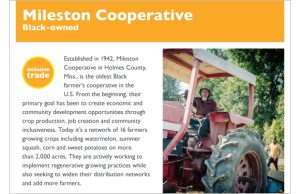
Plan in-store and online promotions by spotlighting Black-owned brands at the shelf or in a display using NCG’s Inclusive Trade signs or create your own tags to call out Black-owned businesses. Schedule in-store or virtual classes or demos hosted by Black producers, farmers or suppliers, and include them on your website events page. Create a BIPOC- or inclusively owned section on your website that connects shoppers to the companies by sharing the producer stories behind the products. Tie it altogether by promoting via social media and consider using Buy Black hashtags. While promoting Black-owned businesses at the shelf is a terrific entry point, co-ops can expand on what Black History Month is all about through Cooperative Principle #5: Education, Training and Information.
Share stories about partnerships with organizations that enrich Black community members or farmers. Offer opportunities for shoppers to get involved. In the past, co-ops have organized discussion groups centered around a book or hosted panel discussions on a film, and provided pathways for shoppers to donate to Black justice organizations. Seek out cultural events the co-op might support and promote these to shoppers, possibly offering an incentive to those who attend. Gaining exposure for events through news outlets can be beneficial, too. Last year, a television news segment featured Twin Cities Co-op Partners (Minneapolis) events during Black History Month, and a local newspaper covered BriarPatch Food Co-op’s (Grass Valley, Calif.) work with a nonprofit dedicated to advancing the public’s understanding of the roles of Black farmers.
Black History Month is a great time to create awareness about the important contributions of Black cooperators. It’s important to acknowledge historical influences, as well as to give voice to the work of contemporary cooperators. Both Seward Community Co-op and Mississippi Market Co-op websites include features and resources on the legacy of African Americans in co-ops. In their Black History Month section, Davis Food Co-op shared the story of 2009 Cooperative Hall of Fame inductee Melbah McAfee Smith. More recent inductees include Ben Burkett in 2020 and Clark Arrington in 2021. Learn more by exploring Dr. Jessica Gordon Nembhard’s study of Black cooperatives in her book “Collective Courage.”
However your co-op chooses to observe Black History Month, thoughtful planning and coordination are the keys to success.