
Working toward equity, belonging, inclusivity and accessibility (EBIA) is a process, not something that can be completed and checked off a list.
This is especially true in marketing and design, where the words and images we choose are viewed by many people both within and outside of our stores. Language that we may have used in the past is not necessarily appropriate today, as our organizations actively engage in EBIA work. It is important for us to think critically about our word choices, welcome feedback and shift to more inclusive language whenever possible. Take category signs, for example.
Personally, I remember reviewing the list of recommended category names back in 2018, when the Interior Design Toolkit was being created. At that time, I was concerned with eliminating the terms “feminine hygiene” (which can imply that menstruation is unclean) and “ethnic foods” (which can imply that western or white foods are the norm). Afterward, I mentally checked “inclusive category signs” off my to-do list.
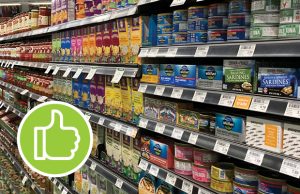
Surprise! My work was not done. NCG recently got feedback that the phrase “feminine care,” which was recommended in our Interior Design Toolkit, is not the most inclusive word choice for an in-store category sign. Shout out to Monadnock Food Co-op for alerting us! You are correct. We can do better.
Today, people outside of the trans* community are becoming more conscious of the fact that not all people who menstruate are feminine and not all people who give birth identify as mothers. NCG has now updated our recommended language to “menstrual care” and “birth & baby care,” respectively. By focusing the language on the life processes, rather than the gendered roles typically associated with them, we can be inclusive of both the typical audience and the folks who are left out at times.
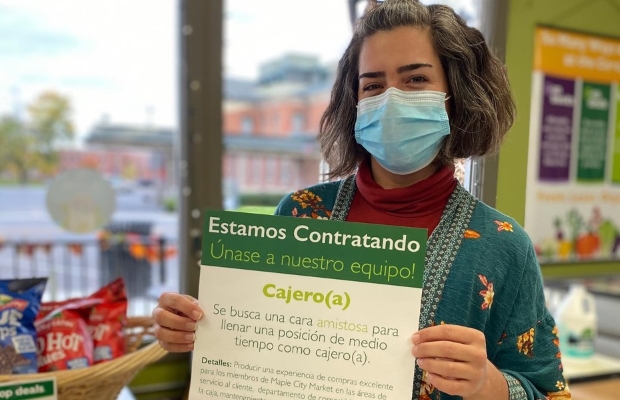
This was just one type of sign. What would happen if we applied this same lens to other language in our stores? A few years ago, Maple City Market in Goshen, Ind., made a conscious effort to improve their bilingual signage. Living in a city with a nearly 30% Latino/Latine population, they had already integrated Spanish into their produce signs and brochures. Their next step was to be sure everyone passing by the co-op knew they were a Spanish-language-friendly store. Adding window clings highlighting key differentiators like “fresh, local, organic and cooperative” in both English and Spanish and posting bilingual hiring notices in the community went a long way. Staff also wear buttons to help shoppers identify those who speak Spanish.
When is the last time you considered the inclusivity of the language on your co-op’s signs? Consider doing a store walk-through with this in mind, checking bathroom signs, menu items, recipe cards and customer forms/surveys. Let us know what you find and how you shift your language to be more inclusive!