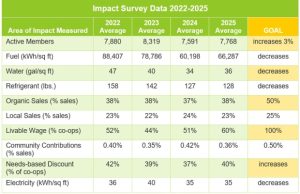

NCG food co-ops have been seeking to improve community food access, local economies, human and environmental health for decades now. Looking at our 2021 Food Co-op Impact Report, it’s clear that we are on the right track and that working together, we certainly have what it takes to bring about the social and environmental changes we want to see.
Because co-ops are grassroots organizations powered by democracy, we have the unique ability to grow and change as our communities’ needs change. Competing against international grocery chains and two of the top five largest corporations in the world can feel daunting at times, but people power is the cooperative’s greatest strength. It’s the reason why co-ops are unusually resilient in hard times and it’s why we’ve been successful at helping to make good things like organic agriculture, animal welfare and zero waste (bulk) shopping popular. Our history demonstrates that when our co-ops work together on common goals, we can change things for the better.
Using the Impact Report to Focus Your Efforts
Tools like our impact report can help us focus our attention on what we want to achieve together and track our progress toward those goals. Because the report is based on impact metrics data collected from your co-ops through Co+efficient, as well as your collective purchasing power, it gives us a picture of where the “average NCG food co-op” is at with its social and environmental impact. Very few, if any, co-op’s individual measurements will reflect what’s reported, and that’s OK — if you reported data for the report, you also have the option to assess your own progress in impact areas and make strategic plans to improve. If we all took that extra step in just one impact area per year, we could really see our national average improve!
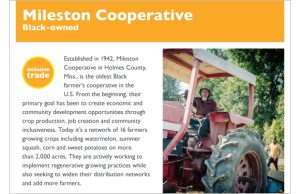
For example, your collective purchasing power is the engine that drives Co+op Deals and makes NCG co-ops national leaders in sales of organic, fair trade, B Corp and cooperatively produced products — products that are also focused on building a more inclusive, just economy and healthier environment. Your co-op could boost participation in promotions for B Corp month (March) and Organic month (September) and Co-op Month/Fair Trade Month (October) and reap a triple benefit of increasing your individual sales, our collective sales and the impact that products with those certifications have on our economy and environment.
Our Collective Impact Helps Us Advocate for Food Co-ops
The Food Co-op Impact Report is invaluable to our work on federal policy and helps us communicate to lawmakers in Washington, D.C., why supporting food co-ops directly benefits their state or district’s economy, constituents and farmers. This helps us advocate for the things that are important to NCG food co-ops and your customers, including racial equity in our food system, funding and policies that support SNAP and SNAP incentive programs, local agriculture, strong organic standards and the inclusion of organic agriculture in climate change policy. Because of their social and economic benefits and resiliency, cooperative businesses are getting a lot of attention in Congress and that’s likely to increase. Having the data to communicate that impact helps us argue for more funds to support cooperative development and grow the cooperative economy.
NCG also distributes this report to the vendors and business partners we work with on your behalf to secure promotions and exclusives. Our industry is full of companies like ours that measure their success by their social and environmental impact, so enhancing their understanding of our unique value proposition sets us apart from our competitors and incentivizes partnership with us — that means more and better deals for you!
Want to Share Our Collective Impact?
The report is not confidential and you can link to a consumer-friendly format of the report on the grocery.coop website that is suitable for promoting on social media. If you prefer to post it on your website or send a copy via email, you can also download and distribute a PDF of the report.