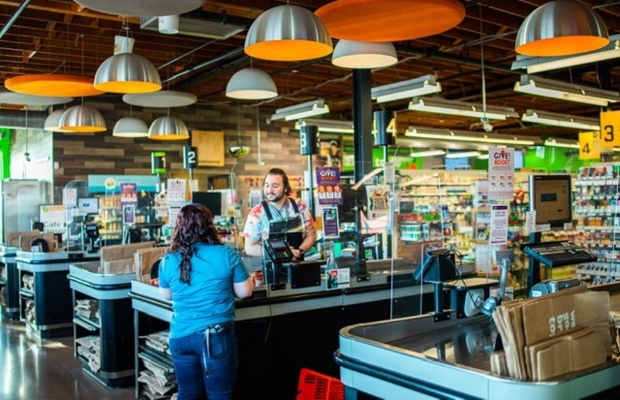

2023’s sales growth and increasing customer counts indicate our system is strengthening, giving co-ops momentum heading into 2024. That’s not to say the new year won’t bring new challenges. Facing a potential shift in the economy from inflation to deflation, service disruptions with distribution partners, and management turnover in our stores all present risks and opportunities for co-ops. I encourage you to consider these factors to meet the demands of the coming year.
Strong Momentum Entering 2024
Customer shopping patterns stabilized in 2023 following the dramatic impacts of COVID-19 during the prior three years. The rate of year-over-year sales growth increased by the highest level co-ops have experienced since 2015, aside from the pandemic pantry-loading growth of 2020. Our system growth also exceeded that of the U.S. retail food market for the first time in many years.

While this increase was partly due to higher inflation, our 2023 average transaction size declined by 2% as the average number of transactions increased by 5%. Our system’s growth in transaction count in 2023 (what we often call customer count) is an indication of our ability to deliver value to more people in the communities we serve. 35 NCG member co-ops experienced sales declines in 2023 — the lowest number in the past six years — further evidence of our overall system strengthening in 2023.
Additional indicators of our strong performance in 2023 include:
- NCG’s SPINS coded dollar growth outpaced the SPINS Natural Channel at 3.9% vs. 3.1%
- NCG’s UNFI purchases growth exceeded that of UNFI total growth for their 2023 fiscal year, 5.6% vs. 4.6%
- Sales of Core Sets items selected by NCG grew at 17.4%
- Sales of Co+op Basics items grew by 31.2%
In short, our customers are choosing their local co-op more often and purchasing more of our cost-supported Core Sets and Co-op Basics items.
Inflation Shifting to Deflation?
NCG expects most operating costs — wages, benefits, insurance, rent, maintenance, etc. — will continue to increase in 2024, but we may see some lower retail prices should the economy and sales begin to slow. These declines would be driven by brands and our competitors lowering some prices and increasing promotions to drive sales growth. This shift can be difficult to manage following several years of price increases — lower inflation and some deflation can result in lower sales and declining gross margin dollars. It will be important to aggressively promote and do everything possible to offer value to more shoppers and to grow customer count and item sales should we begin to experience some price deflation.
Strengthen Your Alternative Supply Chain
Although UNFI and KeHE fill rates have improved in 2023, we know that UNFI is currently consolidating several facilities and this process is messy and disruptive — resulting in a decline in service levels and fill rates during the transition. NCG staff are working with UNFI to minimize the disruption to your business from these warehouse integration projects, but I am sure there will be periodic degradation in service over the next couple of years.
Our secondary supply contract with KeHE can help co-ops manage through these periods, and I encourage you to consider how your co-op might source more from KeHE periodically, as needed. Many of our local vendors are also experiencing difficulties, and our ability to support their operations remains invaluable. In addition to strengthening their local economy, locally owned suppliers can often deliver when national suppliers cannot. I encourage you to contact these suppliers and see how your co-op can help them continue to operate and grow their business.
Invest in Co-op Staff and Systems
While we all are grateful for our recent sales growth, I know that leading a co-op remains challenging. Management turnover is extremely problematic for a business, and I encourage your co-op to increase its investment in staff development wherever possible. Federal relief funds over the past few years and our system’s growth have been very helpful, however, we must continue to invest in our systems, processes and people to keep the cooperative economy growing.
Challenges will continue to test our commitment and dedication, but we know our inclusive business model provides better outcomes for every stakeholder. This work has never been easy — we don’t choose the cooperative form of business because it’s easier; we choose it because it’s better. I know the work is difficult, but I also know of no other endeavor with greater potential to positively impact our food system, and our communities.